
Spider Mite Predators Are Natural, Non-Toxic, Environmentally Friendly Solution to Spider Mite Infestation Problems!
Spider Mites are a common garden and greenhouse pest attacking over 180 different ornamental plants and agricultural crops outdoors, in fruit orchards and greenhouses and are especially damaging to cannabis plants. While spider mites can be a problem for most gardeners, a cannabis grower can have hundreds of dollars in damage in a matter of weeks.
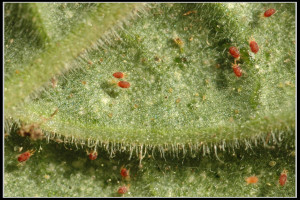 Phytoseiulus persimilis (pur sim ill us) Temperature range is 70 to 85 degrees and 60 to 90% humidity. The persimilis is our biggest seller for cannabis growers and is the ideal beneficial for 90% of the cannabis growers we talk with. They attack 2 spot spider mites, Tetranychus urticae and mites in the Tetranychidae family. Because of its high reproduction rate, persimilis usually exhausts its food supply and eventually dies out. Since they only feed on mites they are not intended as preventative measures. Release 5 per 10 sq ft Neoseiulus fallacis (fa lay see us) Temperature range is 55 to 85 degrees and 50% humidity or more. Also attacks Broad Mites and Hemp Russet Mites. They can survive for a few weeks on pollen alone making them an excellent preventative measure. Works well in conjunction with persimilis. Release 2-3 per sq ft. Mesoseiulus longipes (lon gi peas) Similar to persimilis Temperature range is 65 to 90 and humidity 40% to 60% Release 10-15 per 10 sq ft Neoseiulus californicus (cal if orn ah cus) Temperature 70 -86 Humidity 60% +. Works best when used as a preventative measure as they also feed on pollen and other small insects. Tolerates higher temperatures and lower humidity than persimilis. Also very effective against Broad Mites. Release 5-15 per 10 sq ft. Galendromus occidentalis (ox ci dent tal us) Tolerates higher temperatures 80 -110 degrees and lower humidity, 30 to 40% than persimilis. They attack mites in the nymph and adult stages but not their eggs. Needs at least 11 hours of daylight S. punctillum (pun sa tell um)
| Predator Name | # Adults | Price | Add to Cart |
| Persimilis | 2000 | $39.00 | Buy Now |
| Persimilis | 5000 | $59.00 | Buy Now |
| Persimilis | 20000 | $170.00 | Buy Now |
| Persimilis | 25000 | $225.00 | Buy Now |
| Californicus | 5000 | $59.00 | Buy Now |
| Californicus | 25000 | $175.00 | Buy Now |
| Californicus | 100 sachets | $95.00 | Buy Now |
| Californicus | 500 sachets | $335.00 | Buy Now |
| Occidentalis | 2000 | $95.00 | Buy Now |
| Occidentalis | 5000 | $95.00 | Buy Now |
| Rove Beetles | 3000 | $188.00 | Buy Now |
| Rove Beetles | 5000 | $225.00 | Buy Now |
IMPORTANT! Sachets need to be ordered by 11AM on Wednesday for shipping the following Monday.